Selecting the right tow truck is essential for ensuring safe, efficient, and damage-free vehicle transportation. Whether you’re a towing business owner, an operator handling multiple types of vehicles, or an individual needing towing services, understanding the different tow truck types and their uses helps you make the best choice. The right tow truck improves operational efficiency, minimizes risks, and ensures the job is completed smoothly.
Understanding the Purpose of the Tow
Before choosing a tow truck, it’s important to define the purpose of the tow. The type of vehicle being towed, the distance to be covered, and the situation in which the tow is required all influence the choice of equipment. A light-duty sedan that has broken down on a suburban road requires a very different towing solution compared to a heavy-duty truck stuck off-road or a luxury car that needs delicate handling.
Emergency recovery, roadside assistance, accident response, and vehicle transport all demand specific capabilities. For example, accident scenes often involve damaged or immobilized vehicles, requiring trucks with strong winches and stable lifting mechanisms. Long-distance transport, on the other hand, benefits most from flatbed tow trucks, which provide maximum security during extended journeys.
Flatbed Tow Trucks for Maximum Protection
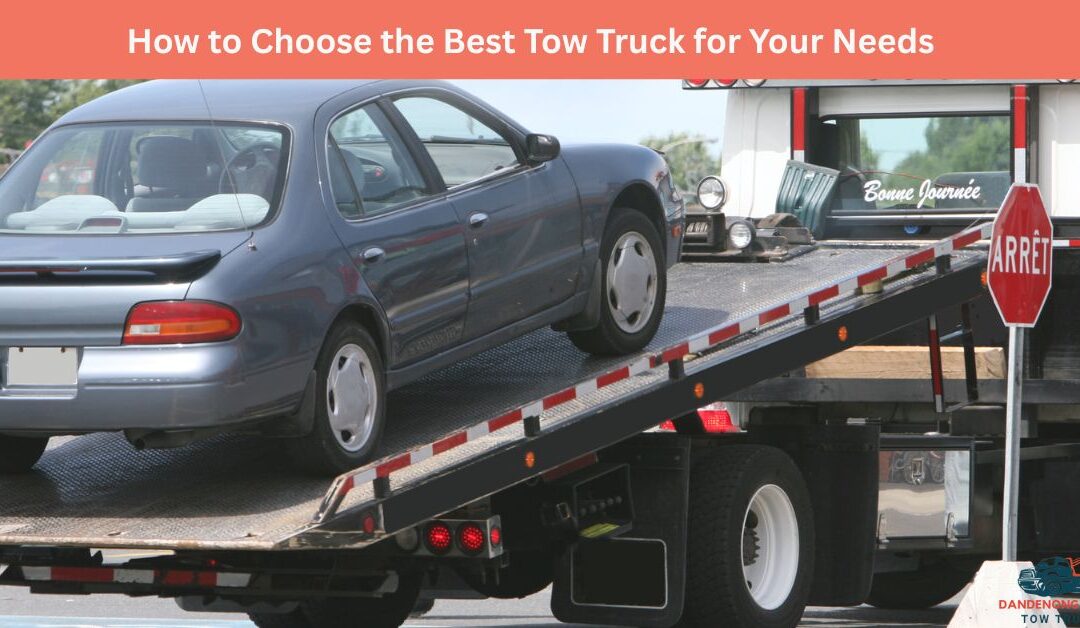
Flatbed tow trucks are one of the most popular and versatile options available. These trucks feature a long hydraulic bed that can be tilted to the ground, allowing vehicles to be driven or winched onto the platform. Once loaded, the bed is leveled and secured for transport. Flatbeds are ideal for vehicles that cannot be towed using traditional methods, such as cars with severe mechanical issues, low-clearance sports cars, or vehicles that have been involved in accidents.
The main advantage of flatbeds is that they keep the entire vehicle off the ground, eliminating wear on the tires and drivetrain during transport. They provide excellent stability, minimize the risk of damage, and are well-suited for both short and long-distance towing. Luxury car owners and towing companies handling delicate or valuable vehicles often prefer flatbed tow trucks for their superior protection.
Wheel-Lift Tow Trucks for Versatility
Wheel-lift tow trucks are a modern evolution of traditional hook-and-chain systems. Instead of attaching directly to the vehicle’s frame or axle, these trucks use a metal yoke that fits under the front or rear wheels. The yoke lifts the towed end of the vehicle off the ground, allowing it to be pulled securely while the opposite wheels remain on the road.
This method is particularly useful for light-duty vehicles and quick roadside recoveries. Wheel-lift trucks are faster to set up than flatbeds and are effective in tight spaces where maneuverability is essential. However, they may not be the best option for all-wheel-drive or luxury vehicles, as dragging any set of wheels on the road can cause drivetrain wear or cosmetic damage. Understanding the vehicle’s drivetrain is crucial when using this method.
Integrated Tow Trucks for Heavy-Duty Applications
Integrated tow trucks, also known as self-loaders, combine the features of wheel-lift and boom trucks into a single powerful unit. They have an arm integrated into the truck’s core, providing increased strength and stability. These trucks are typically used for heavy-duty towing, such as buses, large trucks, or vehicles involved in severe accidents.
Integrated trucks offer exceptional power, making them ideal for towing large vehicles over long distances. Their advanced hydraulic systems and reinforced structure allow operators to handle challenging recovery situations safely. Towing businesses that offer commercial or industrial services often include integrated trucks in their fleets to manage the widest range of towing scenarios.
Hook-and-Chain Tow Trucks for Specialized Use
Although largely replaced by modern towing technologies, hook-and-chain tow trucks still have limited applications today. They use a hook to attach to the vehicle’s axle or frame, and chains lift the vehicle’s front or rear wheels off the ground. This method can cause significant damage to the vehicle’s body or suspension, making it unsuitable for most modern vehicles.
However, hook-and-chain trucks are sometimes used for moving wrecked or junk cars that are no longer roadworthy. They are cost-effective in specific situations but are not recommended for standard vehicle towing, especially when preserving the vehicle’s condition is a priority.
Matching Tow Capacity to Vehicle Weight
One of the most important factors in selecting a tow truck is matching its capacity to the weight of the vehicle being towed. Exceeding the truck’s towing capacity can result in mechanical failures, loss of control, or accidents. Light-duty tow trucks are suitable for passenger cars and small vans, while medium-duty trucks can handle larger SUVs, delivery vehicles, and small buses. Heavy-duty trucks are designed for commercial vehicles, semi-trailers, and heavy equipment.
Before towing, it’s essential to know the gross vehicle weight rating (GVWR) of the car and the towing capacity of the truck. Professional towing companies always verify these numbers to ensure compliance with safety regulations and to protect both vehicles from damage.
Considering Distance and Terrain
The towing distance and terrain also play a significant role in choosing the right tow truck. For short urban tows, a wheel-lift truck may offer the speed and maneuverability required to clear vehicles quickly. For long highway hauls, a flatbed truck provides better stability and protection. Off-road recoveries or challenging terrain may require integrated trucks with strong winches and specialized equipment.
Weather conditions should also be considered. Rain, mud, or uneven surfaces can make towing more complicated. A tow truck with excellent traction, powerful hydraulics, and stable towing mechanisms ensures safer operations under these conditions.
Evaluating Costs and Operational Efficiency
For towing business owners, cost and operational efficiency are major considerations. Flatbed and integrated trucks typically involve higher upfront costs but offer greater versatility and can handle a wider range of jobs, leading to better long-term returns. Wheel-lift trucks are less expensive and ideal for quick, frequent urban calls. Choosing the right mix of tow trucks for your fleet allows you to serve different market segments effectively and maximize profitability.
For individuals hiring towing services, understanding which truck is most appropriate for their vehicle helps avoid unnecessary expenses. A reputable towing company will always match the right equipment to the job, ensuring cost-effective and damage-free service.
Prioritizing Safety and Legal Compliance
Safety should always come first when choosing a tow truck. Trucks must comply with local regulations, including weight limits, lighting requirements, and towing equipment standards. Properly maintained trucks with certified operators reduce the risk of accidents, protect the vehicles being towed, and ensure a smooth towing process. Professional towing companies regularly inspect their trucks, maintain up-to-date certifications, and train operators to handle various towing scenarios safely.
Conclusion
Choosing the best tow truck for your needs involves understanding the vehicle type, towing distance, terrain, and specific circumstances. Flatbeds offer maximum protection, wheel-lift trucks provide versatility and speed, integrated trucks handle heavy-duty tasks, and hook-and-chain systems have limited specialized uses. Matching towing capacity, prioritizing safety, and considering operational efficiency are essential for both professional towing companies and individual vehicle owners.
By selecting the appropriate tow truck and working with experienced operators, you ensure that every towing job is completed efficiently, legally, and without unnecessary damage. The right tow truck not only protects your vehicle but also enhances road safety and operational reliability.
Recent Comments