Low-clearance vehicles present unique challenges in the towing industry. Sports cars, luxury sedans, modified vehicles, and some electric cars often have minimal ground clearance, making them vulnerable to damage during towing if not handled correctly. Proper techniques, equipment, and planning are essential to ensure these vehicles are transported safely and without costly damage.
Understanding the Risks of Low-Clearance Towing
Low-clearance vehicles are at greater risk of underbody damage when being loaded, transported, or unloaded. Components such as bumpers, splitters, exhaust systems, and battery housings can easily scrape or break if the towing angle is too steep.
Tow operators must recognize that traditional towing methods may not be suitable for these vehicles. A lack of awareness or improper handling can result in expensive repairs and dissatisfied customers. Understanding these risks is the first step toward performing safe and professional low-clearance towing.
Choosing the Right Tow Truck and Equipment
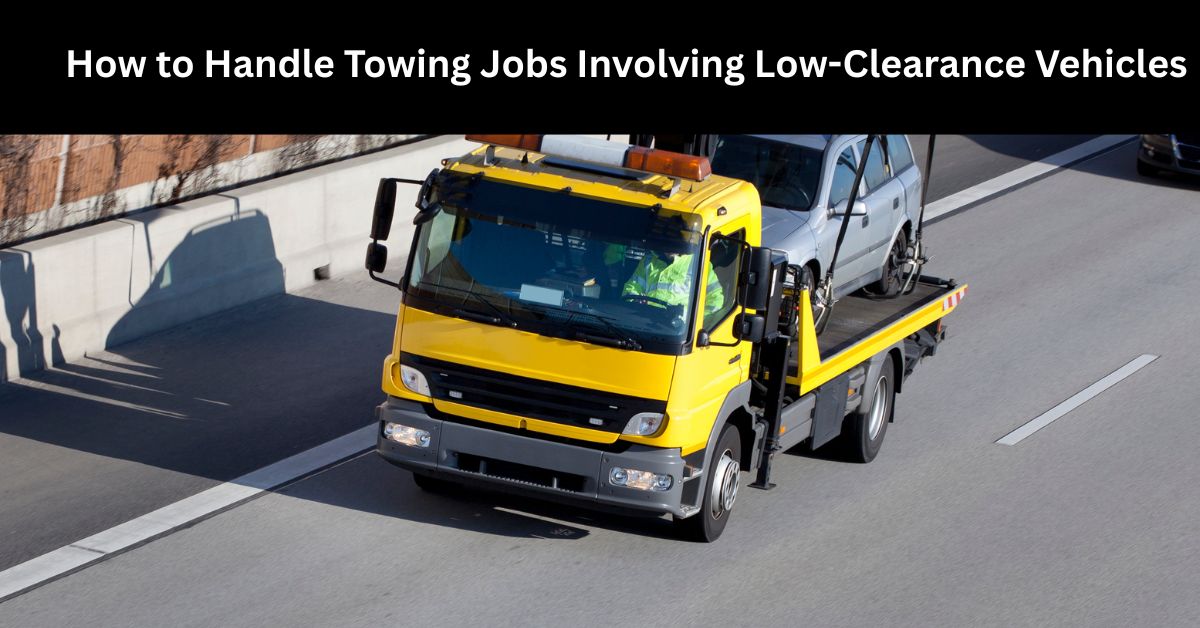
Flatbed tow trucks are generally the safest option for low-clearance vehicles. They allow the vehicle to be fully lifted off the ground, eliminating the risk of dragging or scraping. Tilt-and-slide flatbeds with extended ramps provide smoother loading angles, which are critical for low-profile cars.
Additional equipment such as low-angle ramps, skates, and wheel dollies further reduce the risk of damage. Using the correct equipment demonstrates professionalism and ensures that the vehicle is handled with care throughout the towing process.
Proper Loading and Unloading Techniques
Loading a low-clearance vehicle requires patience and precision. Operators should use gradual incline angles and ensure that the vehicle moves slowly onto the flatbed. Spotters can assist in monitoring clearance points, particularly at the front and rear of the vehicle.
Unloading is equally important. Controlled descent and proper alignment help prevent sudden drops or scraping. Operators should always double-check ramp placement and ensure the ground surface is stable before unloading the vehicle.
Securing the Vehicle Safely
Once the vehicle is on the flatbed, proper securing is essential to prevent movement during transport. Soft straps and wheel nets are preferred over chains, as they reduce the risk of damage to wheels, suspension, and body panels.
Securing the vehicle at designated tie-down points ensures stability while protecting sensitive components. Careful attention to strapping techniques not only protects the vehicle but also enhances the towing company’s reputation for quality service.
Communication and Customer Confidence
Clear communication with the vehicle owner builds trust and confidence. Tow operators should explain the towing process, address any concerns, and reassure customers that their vehicle will be handled carefully.
Professional communication combined with skilled handling creates a positive customer experience. Customers with low-clearance vehicles are often particularly concerned about damage, so transparency and professionalism are key to earning their trust and repeat business.
Conclusion
Towing low-clearance vehicles requires specialized knowledge, proper equipment, and careful execution. By understanding the risks, using flatbed tow trucks, applying precise loading techniques, and communicating clearly with customers, tow operators can safely transport even the most delicate vehicles. Mastery of low-clearance towing not only prevents damage but also reinforces a towing company’s reputation for professionalism and reliability.
Recent Comments