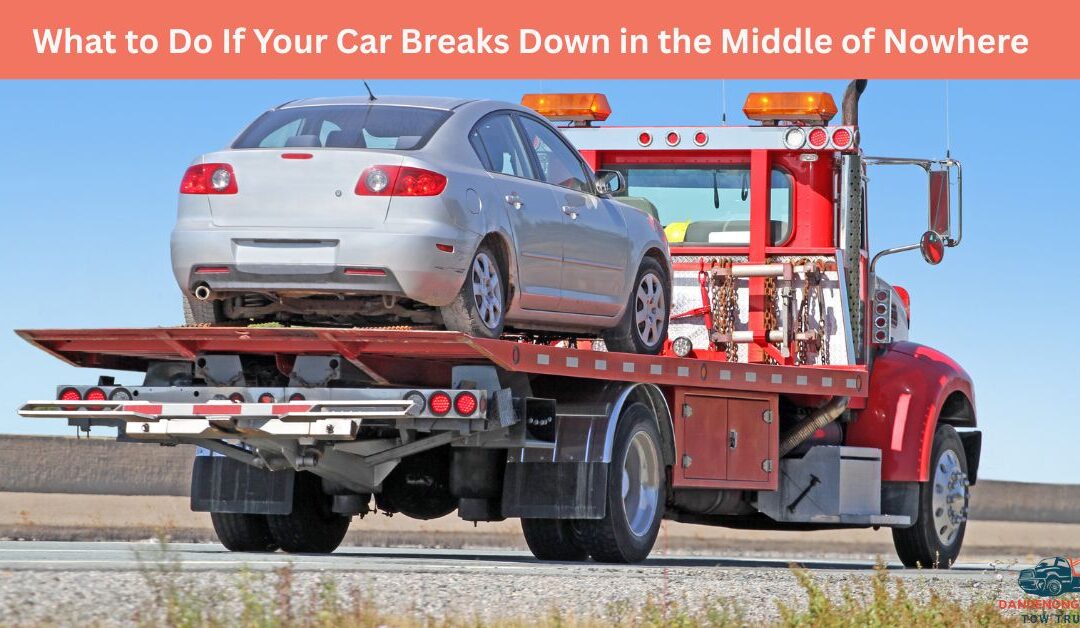
Experiencing a car breakdown in a remote location can be stressful and unsettling, especially if you’re far from help or unfamiliar with the area. Unlike city breakdowns, where assistance is usually nearby, remote areas present unique challenges such as limited mobile coverage, fewer passing vehicles, and longer wait times for help to arrive. Staying calm, prioritizing your safety, and taking the right steps can make all the difference in handling this situation effectively. Understanding how to respond can help keep you and your passengers safe while ensuring your vehicle gets the assistance it needs.
1. Stay Calm and Assess the Situation
The first and most important step is to stay calm and avoid panicking. When your car breaks down in the middle of nowhere, anxiety can cloud your judgment and lead to hasty decisions. Take a deep breath and focus on assessing the situation clearly. Start by turning on your hazard lights to alert other drivers that your vehicle is disabled. If possible, steer the car to a safe spot off the road, ideally on a flat surface away from traffic. This helps prevent further accidents and gives you space to work or wait safely.
Once the vehicle is secure, take a moment to identify the problem. It could be a flat tire, an overheated engine, a dead battery, or something more serious. Knowing the likely cause can help you determine whether it’s something you can temporarily fix or if you’ll need professional towing assistance. Check your fuel gauge, engine temperature, and dashboard warning lights for clues. If the engine is overheating, for example, it’s best to turn off the car immediately to prevent further damage.
2. Prioritize Your Safety and Visibility
Safety should always be your top priority. Even in remote areas with little traffic, you must make your vehicle as visible as possible. Keep your hazard lights on and, if you have reflective triangles or flares in your emergency kit, place them a reasonable distance behind your vehicle to alert approaching drivers. If it’s nighttime, use a flashlight or your phone’s torch to make yourself more visible.
It’s generally safer to stay inside the vehicle with your seatbelt on, especially if you’re on the side of a highway or a poorly lit road. However, if the car is in a dangerous position, such as near a blind corner or on a narrow shoulder, carefully exit the vehicle and move to a safer location away from traffic. Lock the doors if you need to leave the vehicle temporarily, and keep personal belongings like your phone, wallet, and keys with you at all times.
If you’re traveling with passengers, make sure everyone stays calm and follows your lead. Keeping everyone inside the car is usually the safest option while waiting for help, as wandering around a remote road can increase the risk of accidents.
3. Attempt Basic Troubleshooting If Safe to Do So
In some cases, the issue might be something you can fix temporarily to get moving again. If you have the necessary tools and it’s safe to do so, basic troubleshooting can save you time and stress. For example, if it’s a flat tire and you have a spare, you may be able to change it on the spot. If the car battery is dead and you have a portable jump starter, that might get your vehicle running long enough to reach the nearest service station.
However, it’s essential to be realistic about your skills and surroundings. If you’re not confident in what you’re doing, or if the weather or road conditions make it unsafe, it’s better to wait for professional help. Attempting complicated repairs without proper tools or knowledge can make the problem worse. Likewise, if the issue seems serious, such as a broken axle, transmission failure, or engine trouble, do not attempt to drive the car further. Continuing to drive could cause more extensive and costly damage.
This is where having a well-stocked emergency kit can make a big difference. Items like water, basic tools, a flashlight, jumper cables, and a first aid kit can provide crucial support while you wait for assistance.
4. Contact Roadside Assistance or a Towing Service
Once you’ve ensured your safety and assessed the situation, the next step is to contact roadside assistance or a reliable towing service. If you have mobile reception, use your phone to call your roadside assistance provider or a local towing company. Many modern vehicles come with built-in assistance features or GPS-based emergency systems, which can be activated at the touch of a button.
If you’re in a very remote area with poor or no reception, try walking to higher ground or an open area to improve your signal. Sending your location to a trusted friend or family member is a good precaution, especially if you expect a long wait. If you have a roadside assistance membership, they can often track your location and dispatch help even if your phone connection drops intermittently.
While waiting, stay near your vehicle and conserve your phone battery. If you have a car charger, keep your phone plugged in, but avoid unnecessary use like streaming or browsing. Your phone will be your primary lifeline for updates, directions, or emergency calls.
5. Stay Safe and Prepared While Waiting for Help
Waiting for assistance in a remote area can take time, so it’s important to stay prepared and patient. Keep your doors locked and windows up if you remain inside the car, especially at night or if the area feels unfamiliar. If someone offers help, use caution. It’s often safer to stay inside the vehicle and communicate through a slightly lowered window. You can politely decline assistance if you’ve already called for a tow truck, or ask them to contact authorities if you have no signal.
If the weather is hot, try to stay hydrated and use the car’s ventilation sparingly to conserve battery power. In cold weather, use the heater intermittently to maintain warmth without draining fuel. Keep a close eye on your fuel gauge, and avoid running the engine continuously for long periods.
As help approaches, make sure to clearly signal to the tow truck or roadside assistance provider so they can locate you quickly. Once the professionals arrive, explain the situation clearly and let them handle the vehicle safely. Towing companies have the equipment and expertise to deal with remote breakdowns efficiently.
Conclusion
Breaking down in the middle of nowhere can be intimidating, but knowing what to do can make the situation far less daunting. By staying calm, prioritizing safety, assessing the issue, and contacting professional roadside assistance, you can handle the situation confidently. Having an emergency kit, a fully charged phone, and a plan for reaching help can turn a potentially stressful breakdown into a manageable inconvenience. Tow truck operators are trained to respond to these scenarios, and their expertise ensures that both you and your vehicle are safely transported to where you need to go. Preparation, patience, and smart decision-making are key to managing a remote breakdown effectively.
Recent Comments