When a vehicle breaks down or gets involved in an accident, most drivers only think about one thing, getting the car off the road safely and quickly. That’s exactly where tow trucks come in. But towing isn’t just about dragging a broken car from one place to another. It’s part of a much broader system called vehicle recovery services, which focuses on safety, damage control, and getting drivers back on track with as little stress as possible.
Understanding how tow trucks actually help in these situations gives you a better idea of what happens behind the scenes when you call for assistance.
What is vehicle recovery, really?
Vehicle recovery refers to the process of safely retrieving a broken-down, damaged, or stranded vehicle and transporting it to a safe location. This could be a repair shop, your home, or a holding yard depending on the situation.
Tow trucks are the main tool used in this process, but the job involves more than just lifting and transporting. Recovery operators assess risk, manage traffic conditions, and use specialised equipment to prevent further damage to the vehicle.
In simple terms, vehicle recovery is about solving a roadside problem safely, not just moving a car.
Why tow trucks are essential in breakdown situations
When a car stops working on the road, it often can’t be driven safely even if it still starts. Issues like engine failure, transmission problems, flat tyres, or overheating make it risky to continue driving.
Tow trucks help in these situations by:
- Removing the vehicle from dangerous locations
- Preventing further mechanical damage
- Clearing traffic hazards quickly
- Transporting the vehicle safely to a workshop or secure site
Without tow trucks, stranded vehicles could block roads, cause accidents, or suffer more damage if moved incorrectly.
Different types of tow trucks used in recovery
Not all breakdowns are the same, so tow trucks come in different forms depending on the situation.
Flatbed tow trucks
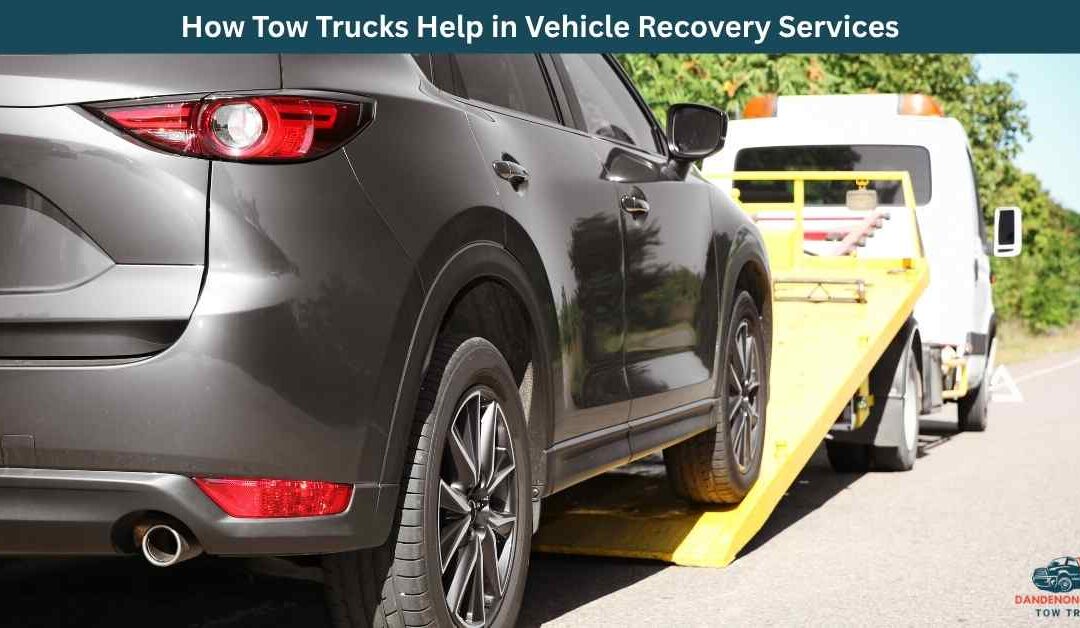
Flatbed trucks are one of the safest and most commonly used recovery vehicles. The entire car is lifted onto a flat platform, keeping all wheels off the ground.
They are ideal for:
- Accident-damaged vehicles
- Luxury or low-clearance cars
- AWD and 4WD vehicles
- Long-distance transport
Because the car doesn’t roll while being transported, there’s minimal risk of further damage.
Tilt tray tow trucks
Tilt tray trucks use a hydraulic system to tilt the back platform, allowing vehicles to be winched or driven onto the tray. Once loaded, the platform is levelled for transport.
These are commonly used for:
- Vehicles that cannot be driven
- Breakdowns on narrow streets
- General roadside recovery jobs
They are versatile and widely used in urban areas.
Wheel-lift tow trucks
Wheel-lift trucks lift either the front or rear wheels off the ground while the other wheels remain on the road or on a dolly.
They are suitable for:
- Short-distance towing
- Light breakdowns
- Vehicles that are still structurally sound
However, they are not always suitable for AWD vehicles or heavily damaged cars.
How tow truck operators assess a recovery situation
Before any towing begins, operators first evaluate the scene. This step is critical for safety and proper handling.
They typically consider:
- Vehicle condition (drivable or not)
- Road type (highway, suburban street, rural area)
- Traffic conditions
- Weather conditions
- Safety risks for driver and passengers
This assessment helps determine the safest recovery method and equipment needed.
The role of safety during vehicle recovery
Safety is the most important part of any towing operation. A breakdown scene can become dangerous very quickly, especially on busy roads or highways.
Tow truck operators follow strict safety procedures such as:
- Using hazard lights and warning signals
- Placing cones or reflective markers
- Wearing high-visibility clothing
- Coordinating with emergency services if needed
- Ensuring passengers are kept at a safe distance
These steps help prevent secondary accidents while the vehicle is being recovered.
How vehicles are loaded onto tow trucks
Loading a vehicle isn’t as simple as hooking it up and pulling it away. It requires careful handling to avoid damage.
Depending on the truck type, operators may:
- Use winches to pull the vehicle onto the tray
- Use hydraulic tilt systems for controlled loading
- Secure wheels using straps and chains
- Adjust positioning to balance weight properly
Once loaded, the vehicle is tightly secured to prevent movement during transport.
What happens after the vehicle is recovered?
After recovery, the vehicle is transported to a designated location. This could be:
- A mechanic workshop for repairs
- An insurance inspection site
- Your home or storage facility
In accident cases, the vehicle may be taken to an authorised holding yard until insurance assessments are completed.
Tow operators often coordinate with insurance companies, which helps speed up claims and repair processes.
How tow trucks help reduce traffic congestion
A stranded or damaged vehicle can quickly disrupt traffic flow, especially during peak hours.
Tow trucks play an important role in:
- Clearing blocked lanes
- Reducing traffic build-up
- Preventing secondary collisions
- Restoring normal road conditions quickly
In busy urban areas, fast recovery response can make a significant difference to road safety and traffic management.
Why professional recovery is better than DIY towing
Some drivers assume they can move a broken-down vehicle themselves using ropes or another car. While this might seem convenient, it often leads to more harm than good.
Improper towing can cause:
- Transmission damage
- Brake failure issues
- Suspension strain
- Road safety hazards
Professional tow truck operators have the correct equipment, training, and insurance coverage to handle vehicles safely. This ensures both the car and surrounding traffic remain protected.
When should you call a tow truck?
You should contact a towing service if:
- The car won’t start or move
- The engine has failed or overheated
- There is accident damage
- The vehicle has a flat tyre in a dangerous location
- Warning lights indicate serious mechanical failure
- It is unsafe to continue driving
Trying to drive a compromised vehicle can quickly turn a small issue into a major repair.
The value of quick response recovery services
Time matters during a breakdown. The longer a vehicle stays on the road, the higher the risk of accidents or further damage.
Fast-response tow truck services help by:
- Arriving quickly at the scene
- Reducing driver stress
- Preventing unsafe roadside situations
- Getting vehicles to safety without delay
This is especially important during bad weather, night driving, or high-traffic conditions.
Why tow trucks are more than just transport vehicles
Tow trucks are often seen as simple transport machines, but in reality, they are a critical part of road safety infrastructure. They support drivers in emergencies, help manage traffic flow, and ensure damaged vehicles are handled properly.
Vehicle recovery services rely heavily on trained operators who understand both mechanical systems and road safety procedures. Without them, roadside breakdowns would be far more dangerous and disruptive.
Tow trucks play a vital role in keeping roads safe, clearing hazards, and helping drivers recover from unexpected situations. Whether it’s a minor breakdown or a serious accident, professional recovery services ensure vehicles are handled correctly from the moment they stop working to the moment they reach safety. That combination of speed, skill, and safety is what makes tow truck services an essential part of modern road support.
If you are in Lynbrook, and looking for a tow truck service, below is the best way to visit us.
Dandenong Casey Tow Trucks
50 Fitzgerald Road, Hallam VIC 3803
(03) 7042 2011
Recent Comments